
“I trusted the girls with all my heart” Corvinus Students Compete in Melbourne
Four undergraduate students from our university represented Corvinus at the Australian Undergraduate Business Case Competition (AUBCC) 2025 in Melbourne, competing against leading teams from North America and Australia across three intensive offline cases under strict time pressure.
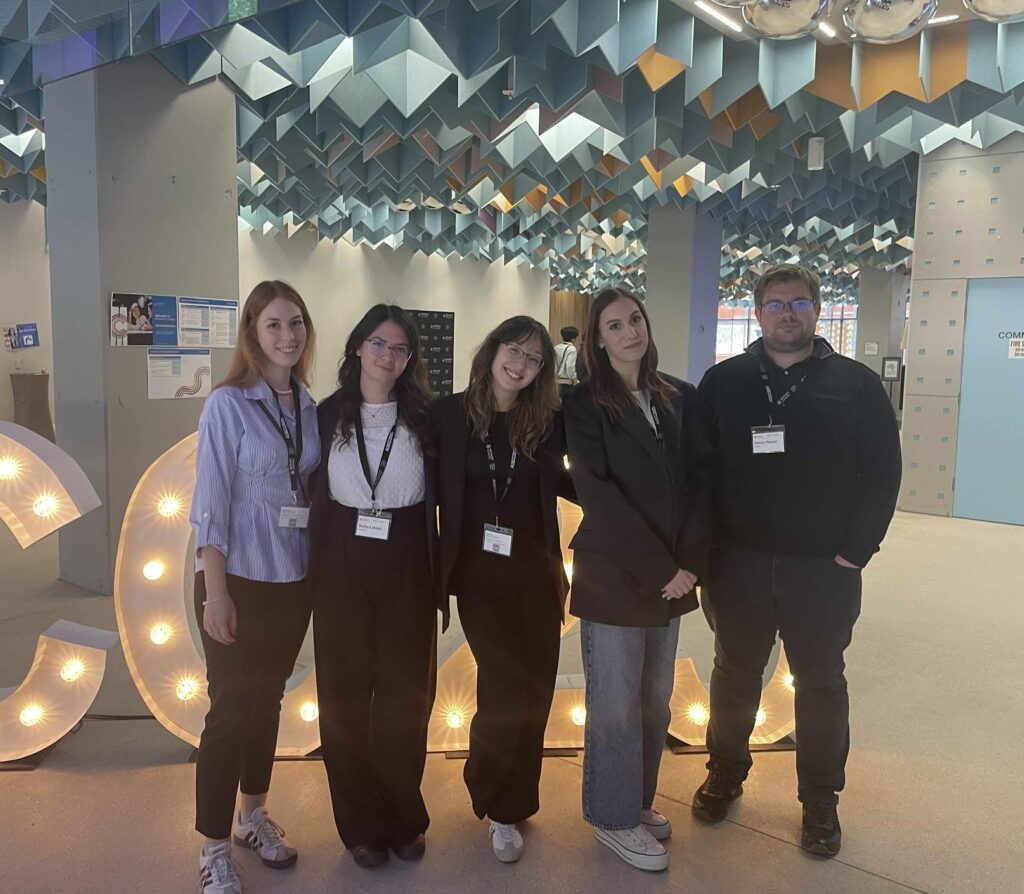
Our undergraduate students Emma Földesi, Lukács Dorka, Gréta Szabó, and Veronika Léránt represented our university at the Australian Undergraduate Business Case Competition (AUBCC) 2025, held in Melbourne between 19–24 October 2025. AUBCC is an international business case competition featuring three offline cases that all teams must solve under significant time pressure.
The students were selected and prepared by their advisor Bence Pistrui, lecturer at the Institute of Entrepreneurship and Innovation. Team selection took place after the students successfully completed the Case Track courses, CIBS and CBS, where they demonstrated strong analytical skills, teamwork, and commitment. Based on their performance, they were invited to represent the university at AUBCC.
Preparation took place throughout the summer and autumn. The team solved more than twelve full cases, participated in several workshops, and received continuous feedback from their advisor as well as other members of the Corvinus Case Track Community. Their preparation focused on building a reliable team routine, improving presentation skills, and developing the ability to think clearly under pressure.
They placed strong emphasis on technical execution, including clear slide design, well-structured timelines, risk assessments, and strategies that were easy to understand.
As Emma Földessy put it “We had a quite tough preparation… We mostly focused on developing a well-established routine for case solving among the four of us, as the case formats weren’t so easy. Through that, we laid a great emphasis on technicalities, such as PPT designs, well-thought timelines and risks, strategy that is „easily” understandable through a flowchart, etc. We wanted the team to look put together, while radiating team spirit.”
Veronika Léránt added on the team dynamics “Our teamwork worked really well because everyone naturally fell into roles that suited their strengths. Dorka usually handled the analysis, Emma focused on the finance part, and Gréta and I worked on the implementation planning. The overall high-level strategy was something we always developed together as a group, which kept everyone involved and aligned. Our team dynamics were supportive, open, and very positive. We communicated honestly, gave each other feedback easily, which everyone responded well to, and kept the mood fun even during stressful moments, which made solving cases together much easier and more enjoyable”.
The team also completed workshops focused on confident speaking and using the right tone during presentations. Their mentor prepared short mini cases in which the team had to explain a solution in just two or three sentences. These exercises significantly improved their improvisation skills, which proved especially important during Q&A sessions and shorter case formats.
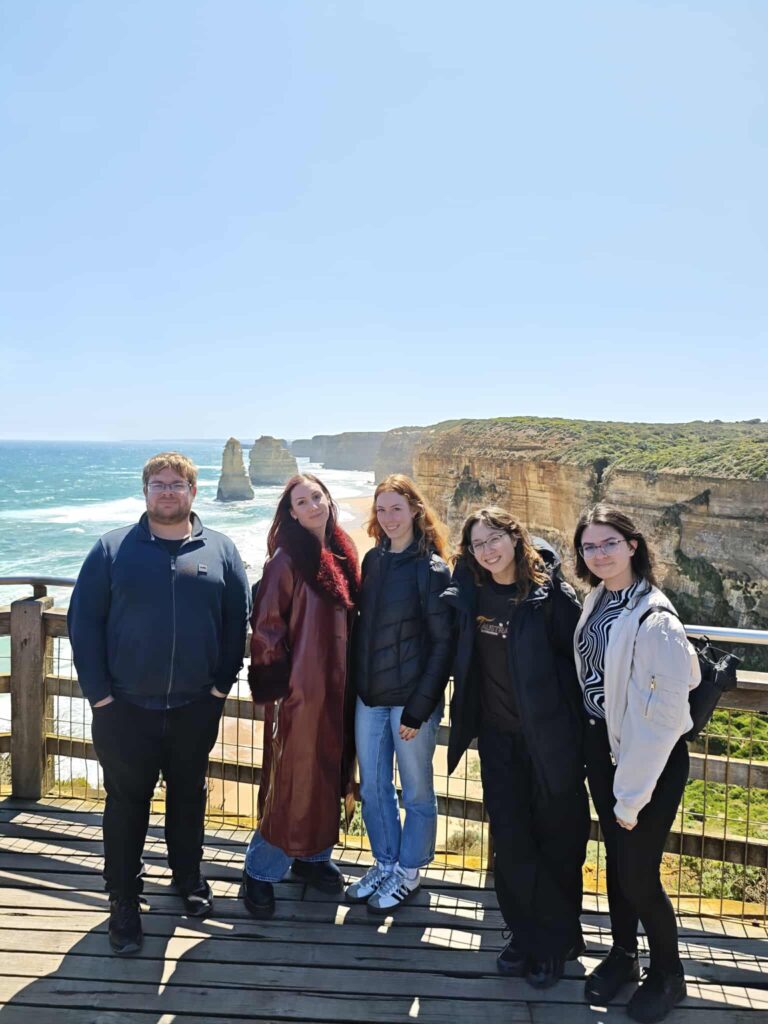
In 2025, the competition consisted of three offline cases, each with a different presentation format. Importantly, none of the case companies were announced in advance, and teams only learned which company they would work on upon arrival, adding an extra layer of complexity and pressure for the case solving process.
The first case, which lasted five hours, involved the company Light + Glo, an Australian premium candle company, together with its sister company BrandScent, a scent marketing agency. The company faced a strategic dilemma: whether to expand internationally, deepen its domestic presence, or shift focus toward BrandScent, which offered higher margins and less seasonality. Teams were asked to propose a sustainable growth strategy that balanced creativity, capital requirements, and scalability. Presentations allowed for unlimited slides, followed by a ten-minute presentation and a ten-minute Q&A session. The second case was shorter, lasting three hours, and used a seated roundtable format with only one slide allowed. The case company was Bush to Bowl, a First Nations–owned social enterprise focused on native foods, education, and caring for Country. Teams were asked to design a five-year strategic direction grounded in Indigenous values. Key topics included responsible scaling, partnerships with Tier 1 corporations, securing land, and supporting other Indigenous businesses within the native food ecosystem. Presentations consisted of a three-minute uninterrupted pitch, a ten-minute Q&A, and a two-minute closing statement.
Dorka Lukács highlighted “We placed a lot of emphasis on the Australian Aboriginal culture, and the jury mentioned that even through it was a hard topic to understand as an overseas team, we still captured their values well in our solutions.”
The final case, lasting twelve hours, involved New Aim Pty Ltd and its subsidiary Dropshipzone, an Australian B2B2C e-commerce platform. Teams were asked to recommend one country for Dropshipzone’s first international expansion and justify their choice, addressing entry mode, market barriers, supplier opportunities, logistics, and outlining a profitability timeline. Additionally, teams had to consider how the company could leverage its technology, including its AI-powered platform AirOxy. Presentations allowed for unlimited slides, followed by a fifteen-minute presentation and a ten-minute Q&A.
Competing as the only European team against prestigious American and Asian universities underscored the importance of time efficiency and presentation delivery. Although the team felt confident in the logic and quality of their solutions, they realised that presentation skills, particularly in a non-native language, are decisive at this level of competition. Reflecting on the finals, Emma Földesi summarised “At least from the finals, we really drew the conclusion that even very fancy slide designs do not have the same effect as presenting simpler, even not so great slides in a genuinely brilliant way.”
While the team placed fourth in each divisional round, as Dorka Lukács mentioned “The jury highlighted that our solutions demonstrated an entrepreneurial mindset with creative solutions. They complimented our team dynamics and Q&A skills.” -highlighting the team’s outstanding team coherence and business mindset.
Beyond competition results, AUBCC 2025 was a transformative experience for the students. During preparation and the competition itself, they built strong team cohesion, trusted one another, and consistently supported each other under pressure. All team members demonstrated a high level of commitment and a strong willingness to learn.
“As we solved many cases during our preparation, we were able to create great team dynamics where everyone was comfortable and efficient in their role.” summarized their experience Dorka Lukács.
“I loved my team, I think we could develop a true team spirit. I trusted the girls with my heart. All of us are quite hard-working fortunately.” added Emma Földesi.
The students agreed that the competition helped them sharpen their ability to think quickly, present under pressure, and collaborate effectively within clearly defined roles. These capabilities will continue to support them in both their academic paths and future professional careers.
“The most important thing I learned was how valuable honest communication and strong team dynamics are when solving cases under pressure. When everyone shares feedback openly and works together, it makes the whole problem-solving process smoother and leads to much stronger solutions” concluded Veronika Léránt.
We congratulate the team on their dedication and for representing the university with professionalism. We also thank their advisor, Bence Pistrui, and the teachers, mentors and seniors at Corvinus Case Track Community for their continuous support throughout the preparation process.